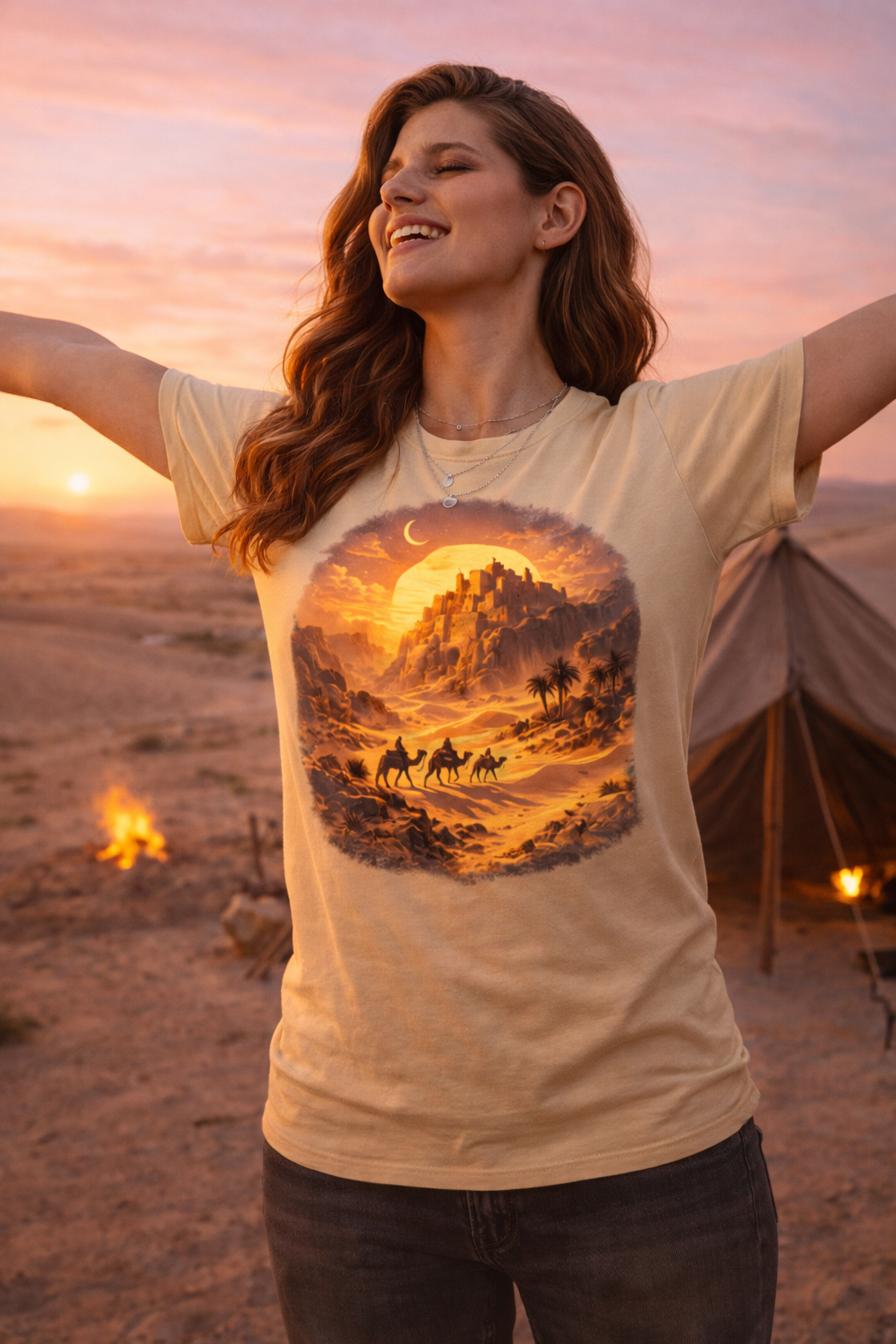
The first thing the Sahara takes from you is your sense of scale. You stand on a dune at sunrise and realize that what you thought was the horizon is actually just another dune, and behind it another, and behind that an ocean of sand that stretches without interruption into four countries. The scale is not beautiful in the way a photograph is beautiful. It is overwhelming in a way that photographs cannot contain.
Most travelers enter the Moroccan Sahara from Merzouga, a small town in the Draa-Tafilalet region where the tarmac road ends and the sand begins. The journey from Fes takes about eight hours by car through some of the most dramatic landscapes in North Africa — the cedar forests of the Middle Atlas, the volcanic moonscape of the High Atlas, the ancient kasbahs of the Draa Valley, and finally the palmeries that mark the edge of the desert.
The best time to be in the Sahara is the hour before and after sunrise. The temperature is cool, the shadows are long, and the sand turns colors that have no names in English. Ochre moves into amber moves into copper moves into a gold so deep it seems to come from inside the earth rather than reflected from the sky. Photographers have tried to capture this for generations. The desert is always better in person.
Sleeping in the desert is an experience that changes you in quiet ways. The silence is total in a way that urban silence is not. There are no mechanical sounds, no distant traffic, no ambient electrical hum. What you hear instead is the occasional shift of sand, the sound of your own breathing, and on windy nights the low resonance of dunes singing — a phenomenon caused by grains of sand vibrating against each other that sounds like a distant musical instrument.
The Berber guides who lead camel treks across the dunes have an intimate relationship with this landscape that goes back thousands of years. They read the desert the way sailors read the sea — noting wind patterns, sand formations, and subtle changes in color that indicate what the weather will do in the next few hours. Spending time with these guides is not just practical. It is an education in a form of knowledge that no school teaches.
The Sahara has shaped North African culture, mythology, and identity in ways that are still visible today. The desert warrior archetypes that appear in our designs at Amanar Studio are not fantasy inventions. They are drawn from real historical and cultural figures — caravan leaders, desert traders, nomadic poets, and the legendary Tuareg warriors who crossed these sands for centuries. When you visit the Sahara, you understand why these figures carry such weight. The desert earns its mythology.
Shop the Collection
Explore the designs inspired by this story. Premium dark Arabian luxury streetwear, made to order and shipped worldwide.
Browse All Designs →